
Contents
- 🌌 Introduction to Black Holes
- 🔍 History of Black Hole Research
- 🚀 Formation of Black Holes
- 🕳️ Characteristics of Black Holes
- 🔭 Detection of Black Holes
- 📊 Types of Black Holes
- 🌈 Black Hole Mysteries
- 🌊 Black Holes in the Universe
- 🔮 Black Hole Simulations
- 🚫 Black Hole Controversies
- 🌐 Black Hole Implications
- Frequently Asked Questions
- Related Topics
Overview
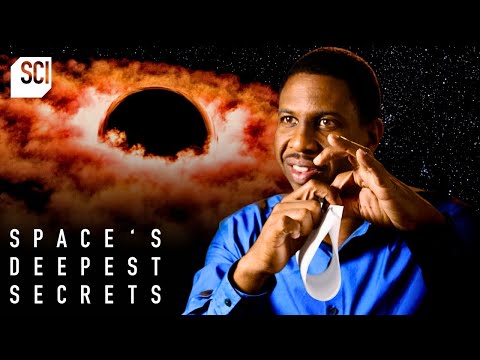
Black holes are among the most fascinating and mysterious objects in the universe, with a Gravity so strong that not even light can escape. The concept of black holes has been around for centuries, with Isaac Newton and Albert Einstein contributing to our understanding of these cosmic enigmas. Today, scientists use Space Telescopes to study black holes and their effects on the surrounding environment. The study of black holes has also led to a greater understanding of Dark Matter and Dark Energy. As we continue to explore the universe, we may uncover even more secrets about black holes and their role in the cosmos. With the help of Artificial Intelligence, scientists can now analyze large amounts of data to better understand black holes. The Event Horizon of a black hole is the point of no return, where the gravitational pull is so strong that anything that crosses it will be trapped.
🔍 History of Black Hole Research
The history of black hole research dates back to the 18th century, when John Michell proposed the idea of a body so massive that not even light could escape its gravity. However, it wasn't until the 20th century that the concept of black holes gained significant attention, with Subrahmanyan Chandrasekhar and David Finkelstein making major contributions to our understanding of these objects. The discovery of Quasars in the 1950s provided further evidence for the existence of black holes. Today, scientists use Computational Models to simulate the behavior of black holes and their surroundings. The study of black holes has also led to a greater understanding of Stellar Evolution and the life cycle of stars. With the help of Machine Learning algorithms, scientists can now analyze large amounts of data to better understand black holes. The Singularity at the center of a black hole is a point of infinite density and zero volume.
🚀 Formation of Black Holes
Black holes are formed when a massive star undergoes a Supernova explosion, leaving behind a dense core that collapses under its own gravity. This collapse creates an intense gravitational field that warps the fabric of spacetime, forming a black hole. The process of black hole formation is complex and involves the interplay of various factors, including Star Formation and Galaxy Evolution. Scientists use Numerical Simulations to model the formation of black holes and their surroundings. The study of black holes has also led to a greater understanding of Cosmology and the origins of the universe. With the help of Data Visualization tools, scientists can now visualize the formation of black holes and their effects on the surrounding environment. The Accretion Disk of a black hole is a disk of hot, dense gas that surrounds the black hole and emits intense radiation.
🕳️ Characteristics of Black Holes
Black holes are characterized by their Mass, Spin, and Charge. The mass of a black hole determines the strength of its gravitational field, while its spin affects the way it interacts with the surrounding environment. The charge of a black hole is a measure of its electric charge, which can affect its behavior in certain situations. Scientists use Spectroscopy to study the properties of black holes and their surroundings. The study of black holes has also led to a greater understanding of Quantum Mechanics and the behavior of particles at the atomic and subatomic level. With the help of Statistical Analysis techniques, scientists can now analyze large amounts of data to better understand black holes. The Ergosphere of a black hole is a region around the black hole where the gravitational pull is so strong that it can extract energy from objects that enter it.
🔭 Detection of Black Holes
The detection of black holes is a challenging task, as they do not emit any Electromagnetic Radiation and are therefore invisible to our telescopes. However, scientists can detect black holes by observing their effects on the surrounding environment, such as the motion of stars and gas. The Hubble Space Telescope has played a crucial role in the detection of black holes, allowing scientists to study the properties of these objects in unprecedented detail. The study of black holes has also led to a greater understanding of General Relativity and the behavior of gravity in extreme environments. With the help of Signal Processing techniques, scientists can now analyze large amounts of data to better understand black holes. The Gravitational Lensing effect of a black hole can be used to detect its presence and study its properties.
📊 Types of Black Holes
There are four types of black holes, each with its own unique characteristics. Stellar Black Holes are the smallest and most common type of black hole, formed from the collapse of individual stars. Intermediate-Mass Black Holes are larger than stellar black holes but smaller than Supermassive Black Holes, which are found at the centers of galaxies. Primordial Black Holes are thought to have formed in the early universe and are much smaller than stellar black holes. Scientists use Computational Models to simulate the behavior of black holes and their surroundings. The study of black holes has also led to a greater understanding of Cosmological Models and the origins of the universe.
🌈 Black Hole Mysteries
Despite significant advances in our understanding of black holes, there are still many mysteries surrounding these objects. One of the biggest mysteries is the Information Paradox, which questions what happens to the information contained in matter that falls into a black hole. Another mystery is the Black Hole Complementarity principle, which suggests that information that falls into a black hole is both lost and preserved. Scientists use Theoretical Models to study the behavior of black holes and their surroundings. The study of black holes has also led to a greater understanding of Quantum Gravity and the behavior of particles at the atomic and subatomic level. With the help of Machine Learning algorithms, scientists can now analyze large amounts of data to better understand black holes.
🌊 Black Holes in the Universe
Black holes are found throughout the universe, from the centers of galaxies to the remnants of Supernovae. The study of black holes has led to a greater understanding of Galaxy Evolution and the role of black holes in shaping the universe. Scientists use Observational Data to study the properties of black holes and their surroundings. The study of black holes has also led to a greater understanding of Cosmological Models and the origins of the universe. With the help of Data Visualization tools, scientists can now visualize the distribution of black holes in the universe and their effects on the surrounding environment. The Large-Scale Structure of the universe is thought to be influenced by the presence of black holes.
🔮 Black Hole Simulations
Scientists use Numerical Simulations to model the behavior of black holes and their surroundings. These simulations allow scientists to study the effects of black holes on the surrounding environment and to test theories about the behavior of black holes. The study of black holes has also led to a greater understanding of Computational Physics and the development of new algorithms and techniques for simulating complex systems. With the help of High-Performance Computing, scientists can now simulate the behavior of black holes in unprecedented detail. The Magneto-Hydrodynamics of black holes is a complex and poorly understood phenomenon that is thought to play a crucial role in the behavior of black holes.
🚫 Black Hole Controversies
The study of black holes is not without controversy, with some scientists questioning the existence of black holes and others debating their role in the universe. One of the biggest controversies is the Black Hole Firewall paradox, which questions the nature of the Event Horizon and the fate of matter that falls into a black hole. Scientists use Theoretical Models to study the behavior of black holes and their surroundings. The study of black holes has also led to a greater understanding of Quantum Gravity and the behavior of particles at the atomic and subatomic level. With the help of Machine Learning algorithms, scientists can now analyze large amounts of data to better understand black holes.
🌐 Black Hole Implications
The study of black holes has significant implications for our understanding of the universe and the laws of physics. The discovery of black holes has led to a greater understanding of General Relativity and the behavior of gravity in extreme environments. The study of black holes has also led to a greater understanding of Cosmological Models and the origins of the universe. With the help of Data Visualization tools, scientists can now visualize the distribution of black holes in the universe and their effects on the surrounding environment. The Future of Astronomy is likely to be shaped by the study of black holes and their role in the universe.
Key Facts
- Year
- 2015
- Origin
- David Finkelstein's 1958 paper on black holes
- Category
- Astronomy
- Type
- Astronomical Phenomenon
- Format
- what-is
Frequently Asked Questions
What is a black hole?
A black hole is a region in space where the gravitational pull is so strong that not even light can escape. It is formed when a massive star undergoes a supernova explosion, leaving behind a dense core that collapses under its own gravity. The study of black holes has led to a greater understanding of General Relativity and the behavior of gravity in extreme environments. With the help of Space Telescopes, scientists can now study black holes in unprecedented detail. The Event Horizon of a black hole is the point of no return, where the gravitational pull is so strong that anything that crosses it will be trapped.
How are black holes detected?
Black holes are detected by observing their effects on the surrounding environment, such as the motion of stars and gas. The Hubble Space Telescope has played a crucial role in the detection of black holes, allowing scientists to study the properties of these objects in unprecedented detail. The study of black holes has also led to a greater understanding of Stellar Evolution and the life cycle of stars. With the help of Signal Processing techniques, scientists can now analyze large amounts of data to better understand black holes. The Gravitational Lensing effect of a black hole can be used to detect its presence and study its properties.
What are the different types of black holes?
There are four types of black holes, each with its own unique characteristics. Stellar Black Holes are the smallest and most common type of black hole, formed from the collapse of individual stars. Intermediate-Mass Black Holes are larger than stellar black holes but smaller than Supermassive Black Holes, which are found at the centers of galaxies. Primordial Black Holes are thought to have formed in the early universe and are much smaller than stellar black holes. Scientists use Computational Models to simulate the behavior of black holes and their surroundings.
What is the information paradox?
The information paradox is a mystery surrounding black holes, which questions what happens to the information contained in matter that falls into a black hole. The study of black holes has led to a greater understanding of Quantum Mechanics and the behavior of particles at the atomic and subatomic level. With the help of Machine Learning algorithms, scientists can now analyze large amounts of data to better understand black holes. The Black Hole Complementarity principle suggests that information that falls into a black hole is both lost and preserved.
What is the future of black hole research?
The future of black hole research is likely to be shaped by advances in Computational Physics and the development of new algorithms and techniques for simulating complex systems. With the help of High-Performance Computing, scientists can now simulate the behavior of black holes in unprecedented detail. The study of black holes has also led to a greater understanding of Cosmological Models and the origins of the universe. The Future of Astronomy is likely to be shaped by the study of black holes and their role in the universe.
How do black holes affect the surrounding environment?
Black holes can affect the surrounding environment in several ways, including the Gravitational Lensing effect, which can be used to detect their presence and study their properties. The study of black holes has also led to a greater understanding of Galaxy Evolution and the role of black holes in shaping the universe. With the help of Data Visualization tools, scientists can now visualize the distribution of black holes in the universe and their effects on the surrounding environment. The Large-Scale Structure of the universe is thought to be influenced by the presence of black holes.
What is the role of black holes in the universe?
Black holes play a crucial role in the universe, shaping the Large-Scale Structure of the universe and influencing the formation and evolution of galaxies. The study of black holes has led to a greater understanding of Cosmological Models and the origins of the universe. With the help of Space Telescopes, scientists can now study black holes in unprecedented detail. The Event Horizon of a black hole is the point of no return, where the gravitational pull is so strong that anything that crosses it will be trapped.